
Over 20 years of risk analysis expertise
Our expert teams adapt to your needs to quickly assess the stakes and maturity of your projects. Backed by our risk analysis expertise across a wide range of organizations — small businesses, SMEs, and public entities — we adapt to your level of digital security.
Our experts master current standards such as GDPR, the ISO/IEC 27000 family and others, and are certified in ISO/IEC 27001, ISO/IEC 27005, and EBIOS Risk Manager.
How the risk management process unfolds
01
Establishing the context
• Identification of stakeholders
• Definition of the stakes, scope and objectives
• Identification of the applicable regulatory framework and security baseline
• Identification of the CIA-T/P security criteria required by the project
02
Identifying the elements needed for the analysis
• Business assets and information to protect within the project
• Vulnerabilities affecting those assets
• Applicable threats, feared events, risk sources and objectives
• Security measures already in place
03
Risk assessment
• Formalizing risk scenarios, which can be broken down into operational and strategic scenarios in the case of the EBIOS RM method
• Rating risks using a predefined matrix based on impact and likelihood
04
Treatment of identified risks
• Defining security measures to reduce the estimated risk level
• Defining a risk treatment strategy
• Defining a risk reduction plan or a Continuous Security Improvement Plan — RSE Label
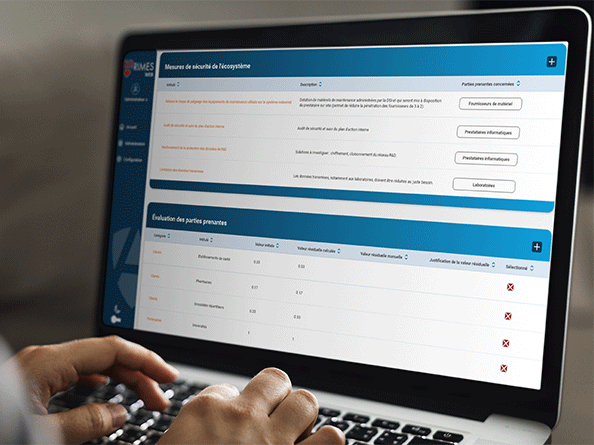
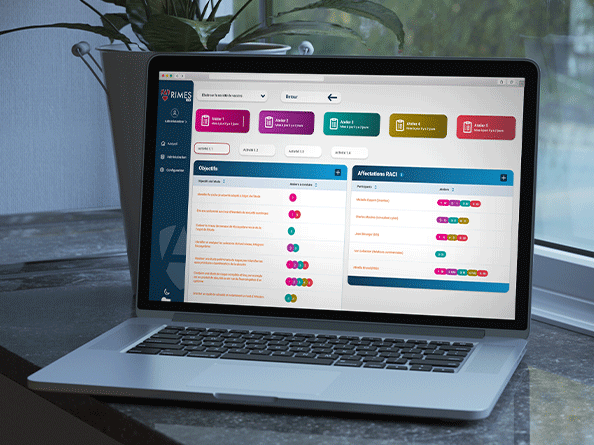
Through its software development activity, ADACIS also offers its ARIMES software solution, certified compliant with ANSSI's EBIOS Risk Manager methodology since May 19, 2021.
This application was designed to support analysts in carrying out every workshop of the EBIOS Risk Manager method, so it integrates seamlessly into your studies and risk management processes.