
The Pentest.LLM project aims to improve the performance and efficiency of penetration testing activities through AI-assisted tools.
The Pentest.LLM project aims to explore and apply the potential of Large Language Models (LLMs) to enhance the capabilities of pentesters. Based on contextualized data from an exploratory approach, it will help understand potential attack paths and generate payloads to test them.
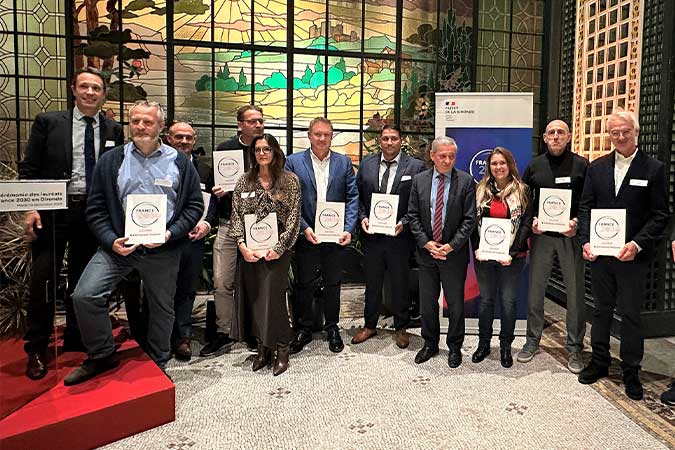
France 2030 Laureate
We are very proud to be among the 12 new 'France 2030' laureates selected to strengthen the industrial cybersecurity offering. The PentestLLM project leverages the power of generative AI and large language models (LLMs) to protect our digital infrastructure.
A total of 3 million euros has been allocated to be shared among the various partners chosen for the project.
Our partners
We are surrounded by exceptional players combining research, development and cyber expertise.



Research work
Our expertise in OSINT and surfacing enriches this sovereign LLM model. The goal is to enhance auditors' capabilities in exploiting new vulnerabilities through the automatic generation of exploitation scripts (payloads). This project, funded by the French State, accelerates innovation for cybersecurity products and services, enabling efficient and rapid implementation of the two new NIS2 and DORA regulations.
The project offers a technological innovation that breaks with current penetration testing practices: indeed, payload generation is today done entirely manually, as it is considered too complex and too sensitive.
The use of LLMs on this subject is entirely original, and brings a number of technical and technological challenges that the Pentest.LLM project aims to address, particularly related to the quality and predictability of data from generative AI models, and the dependence of these models on the availability of a large volume of data. In addition, the project will involve creating a model that guarantees the security of sensitive data during penetration tests.